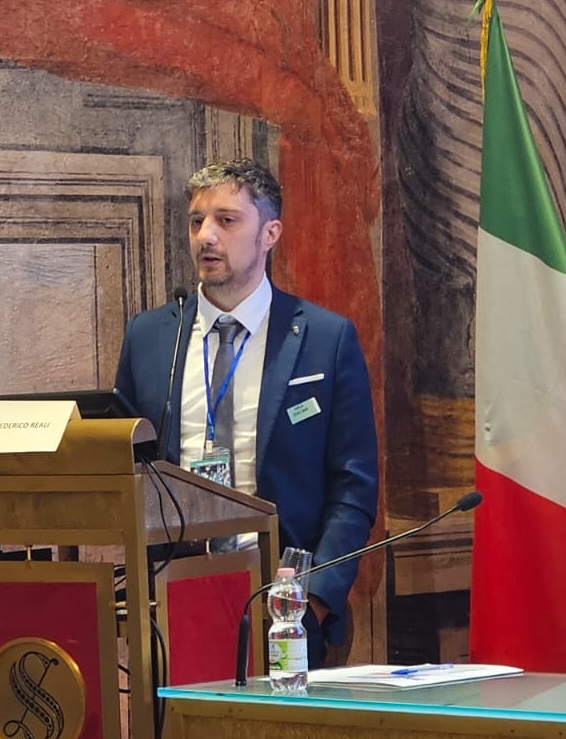
Principal investigator / group leader profile
Federico Reali, PhD
Group Leader — Quantitative Systems Pharmacology, COSBI
I hold a PhD in Mathematics from the University of Trento and lead the Quantitative Systems Pharmacology group at COSBI. My research sits at the interface of applied mathematics, systems biology, quantitative pharmacology and model-informed drug development.
I coordinate multidisciplinary modelling projects with academic, clinical, non-profit and industry collaborators and supervise research activities in quantitative and computational biomedicine.
Research programme
My group develops mechanistic computational models that combine biological knowledge with experimental and clinical data to understand disease mechanisms, predict treatment response and support translational decisions. The common goal is to turn complex, heterogeneous evidence into quantitative hypotheses that can be tested, challenged and used to guide drug development.
QSP, PK/PD and PBPK
Cross-species translation, tissue and target-site exposure, mechanistic pharmacology, dose selection and quantitative comparison of therapeutic strategies.
Virtual populations
Generation and calibration of plausible patients, representation of heterogeneity, parameter non-identifiability, uncertainty and reproducible population-level simulation.
Mechanistic digital twins
Patient-conditioned models integrating biomarkers, longitudinal observations and mechanistic knowledge for stratification and individualized simulation.
AI for mechanistic science
Surrogate modelling, parameter-space exploration, scientific knowledge extraction, hybrid mechanistic/data-driven models and AI-assisted model-building workflows.
Current application areas
- Tuberculosis and global health: minimal-PBPK and translational pharmacology, lung and lesion exposure, spatial PDE/agent-based modelling, target attainment and dose prediction.
- Neurodegeneration: mechanistic modelling of alpha-synuclein biology and Parkinson’s disease, including GBA1-associated disease and sphingolipid metabolism.
- Rare diseases: lysosomal storage disorders, Gaucher disease and quantitative approaches for heterogeneous small patient populations.
- Advanced therapeutics: mechanistic modelling of biologics, antibodies, innovative delivery approaches and emerging therapeutic modalities.
Methodological interests
Alongside disease- and drug-specific projects, I work on general methods for virtual population generation, patient-specific models, mechanistic digital twins, and the integration of machine learning and generative AI with quantitative mechanistic modelling. I am particularly interested in workflows that preserve scientific traceability and source grounding while using AI to accelerate literature synthesis, model construction, coding and computational experimentation.
I also contribute to discussions on model credibility, context of use, reporting and reproducibility for translational and regulatory applications of QSP and other mechanistic models.
Research leadership and community
- Group Leader of Quantitative Systems Pharmacology at COSBI.
- Guest Editor, npj Systems Biology and Applications Collection on systems approaches for virtual clinical trials and digital twins.
- Contributor to the International Society of Pharmacometrics QSP community, including activities on model credibility assessment.
- Vice President of the Scientific Committee of ALISEI, the Italian National Life Sciences Cluster.
- University teaching and supervision at the University of Trento in statistics, mathematical modelling and systems biology, including MSc and PhD research projects.
Research environment
The COSBI QSP Group works across pharmaceutical, academic, clinical and non-profit collaborations. Current projects combine mechanistic modelling, computation and biomedical data, with an emphasis on reproducibility, transparent evidence integration and tools that can be shared across a multidisciplinary research team.
For the group’s current research themes, collaborations and selected projects, see the COSBI Quantitative Systems Pharmacology page.